


프로그램
개막식
기조연설
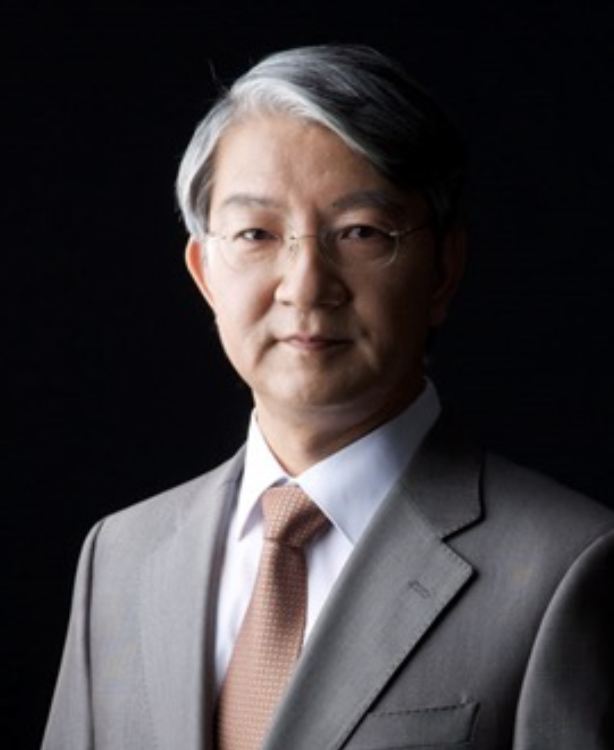
이상엽(KAIST 특훈교수)
• 現 KAIST 생명화학공학과 특훈교수
• 現 한국공학한림원, 한국과학기술한림원 정회원
• 現 미국공학한림원, 미국국립과학원, 영국왕립학회, 중국공정원 국제/외국회원
• 국가바이오위원회 부위원장(2024.12.~2026.12.)
• Eni상 수상, 이태리 대통령, 로마, 이탈리아
• Samson상 수상, 이스라엘 총리, 이스라엘
• 과학기술훈장 창조장 수훈
Sang Yup Lee is Distinguished Professor of Chemical and Biomolecular Engineering, and holds academician titles of several countries, including the International Member of the National Academy of Sciences of the United States, the National Academy of Engineering of the United States, Foreign Member of Royal Society UK, as well as the Foreign Member of the Chinese Academy of Engineering. As a pioneer of systems metabolic engineering, he has led research at the interface of metabolic engineering, systems biology, synthetic biology, and industrial biotechnology since joining KAIST in 1994. He received his B.S. in chemical engineering from Seoul National University and his M.S. and Ph.D. in chemical engineering from Northwestern University. His research has enabled the development of diverse microbial cell factories and bioprocesses for the sustainable production of chemicals, materials, natural products, and health-related molecules. He has authored more than 800 journal papers and holds more than 860 patents. He received numerous international awards, including the Eni Award, Samson Prize, Marvin Johnson Award, and James Bailey Award. He was awarded the Order of Science and Technology Merit-Changjo Medal, the highest honor conferred by the Korean government.
바이오제조를 가능하게 하는 시스템 대사공학
Microbial biomanufacturing is transforming the way chemicals, materials, pharmaceuticals, and natural products are produced by providing sustainable alternatives to conventional petrochemical synthesis and natural extraction. However, realizing economically viable bioprocesses requires microbial cell factories that achieve high titer, yield, productivity, robustness, and scalability—capabilities that cannot be attained through conventional metabolic engineering alone. To address these challenges, we developed systems metabolic engineering, an integrative framework that combines systems biology, metabolic engineering, synthetic biology, evolutionary engineering, and bioprocess engineering to enable the rational design and optimization of industrial microorganisms. In this lecture, I will present the principles and recent advances in systems metabolic engineering that have enabled the efficient production of a broad spectrum of industrial products, including bulk chemicals, polymers, fuels, proteins, and diverse natural products. Particular emphasis will be placed on our recent efforts to establish microbial platforms for the production of high-value natural products and their structurally diversified derivatives. These include the de novo reconstruction of complex biosynthetic pathways, engineering of precursor and cofactor metabolism, optimization of enzyme activities and pathway organization, dynamic metabolic regulation, and combinatorial biosynthesis for generating expanded chemical diversity. I will also demonstrate how computational approaches can be integrated with microbial engineering to construct large libraries of natural-product analogues and prioritize bioactive molecules for pharmaceutical applications, thereby accelerating both natural-product discovery and development. The lecture will further discuss how artificial intelligence is reshaping systems metabolic engineering by enhancing pathway discovery, enzyme engineering, and strain optimization. Collectively, these advances establish systems metabolic engineering as a foundational technology for next-generation biomanufacturing. By integrating biological design, computational intelligence, and scalable bioprocess engineering, systems metabolic engineering is expanding the accessible chemical space of biology and enabling sustainable production of chemicals, materials, pharmaceuticals, and natural products that will support the emerging global bioeconomy.

